NorthCenter Masonry Home evaluated for leaks in master bath - March 4, 2026
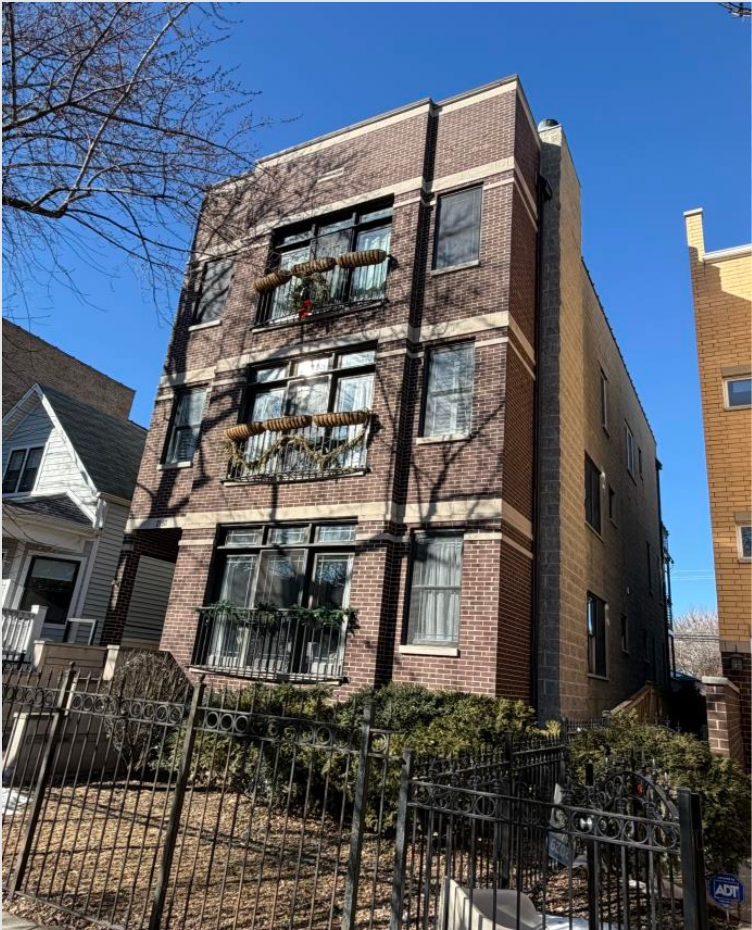
Information from Wet Building Solutions building assessment performed March 4, 2026, Basic Building Construction Description:
Structure has a brick face front elevation with mixed precast concrete and limestone accents.
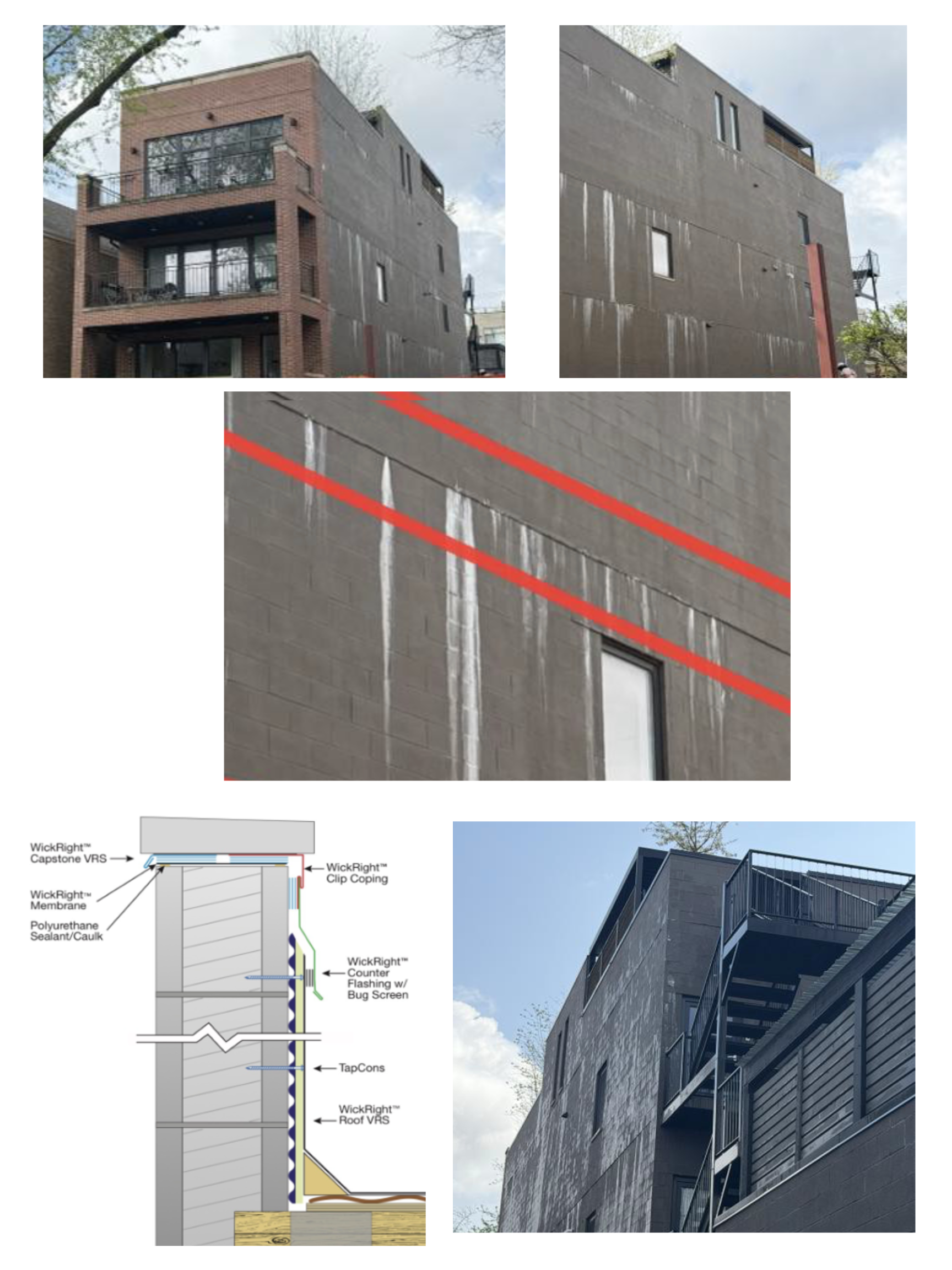
Sides and rear elevations are split face block.
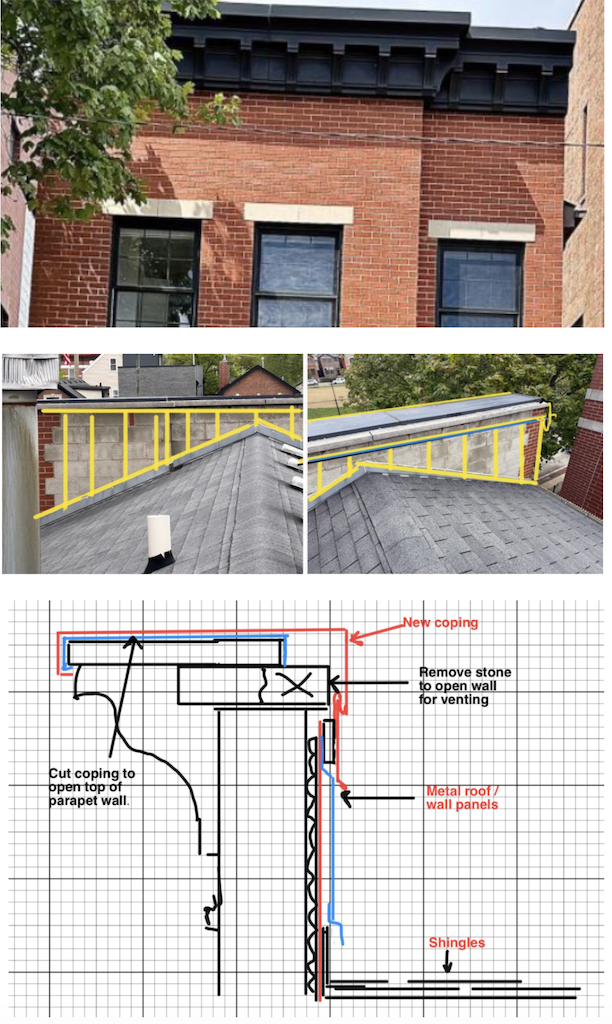
Limestone sills: No flashing visible in mortar joints, so cannot assume flashing is present. Even if there is flashing, if the flashing cut short, the mortar can trap -moisture and divert it around the flashing into the building. Masonry walls are topped with sheet metal covered limestone copings. Sides and rear wall are finished with terracotta tiles.
Reported Issue:
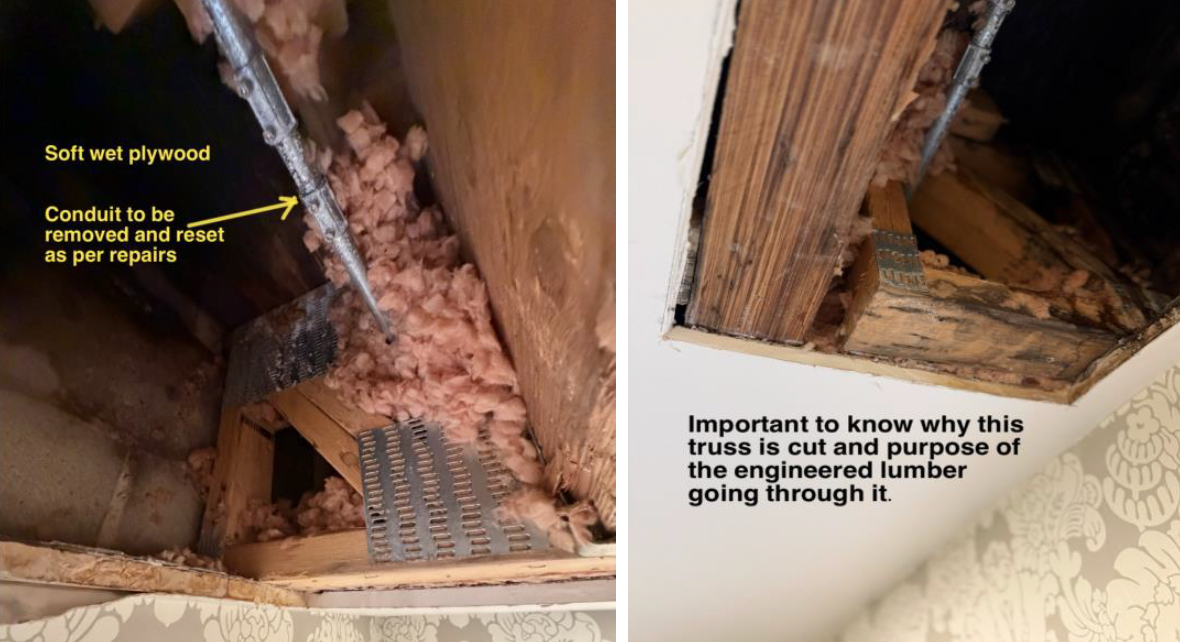
Client is experiencing water staining primary bath ceiling and windows. When ceiling is opened, water is present saturating the bottom of roof sheathing, fiberglass insulation and wood trusses.
Recommended repair has three steps:
- Blocking bulk water from entering the masonry
- Flashing all horizontal surfaces
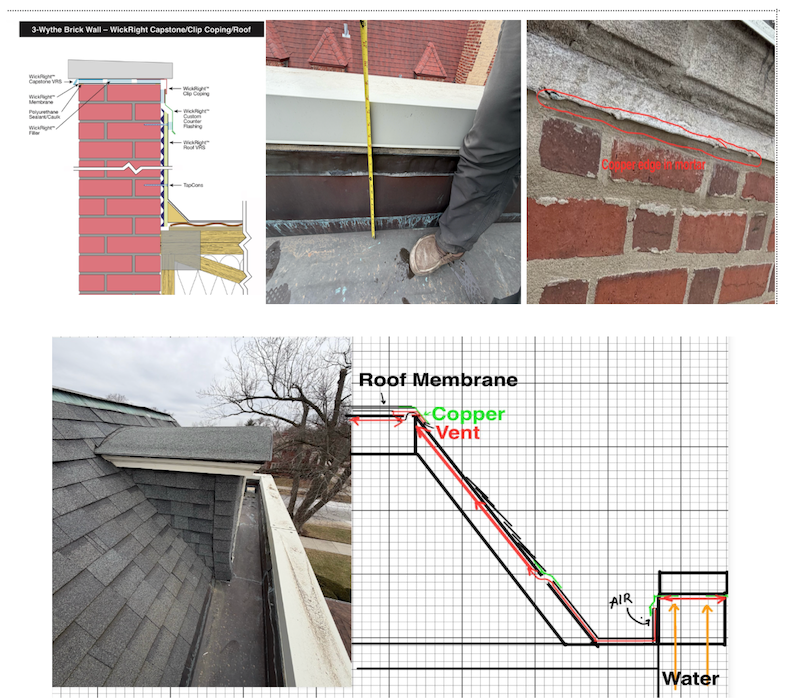
- Venting the structure to exhaust water vapor
None of the steps can resolve the water issues by individually, but together, they can make the building healthy.
Leak Source Description:
This is a primary bath ceiling showing masonry water penetration and condensation in the roof cavity.
To fix it we need to build in a way to exhaust trapped water and vapor and maintain dry condition. The building needs to release more water than it absorbs.
The trusses are wet due to bulk water ingress through the masonry.
In addition, the mortar is in direct contact with structural lumber (trusses) allowing the wood to get wet and stay wet.
Roof Venting:
EPDM roof: we will pull back portions of the roof membrane as needed, insuring as much of the roof membrane stays intact as possible.
Install WickRight Roof Vent and inspect trusses. Repair recommendations will be made once we see the condition of the trusses.
We will then re-install the roof membrane onto the WickRight Roof Vent.
Scuppers should be removed, flashed and re-installed.
Initial Goal: Trusses inspected, mortar removed near truss ends, venting installed to promote continual drying.
Masonry Sealant and Scaffolding Information:
Masonry needs to be sealed to stop bulk water from saturating the mortar joints and all masonry units, brick and split face block.
Ideally, every masonry sealant project should have full scaffolding so the masons can see every crack and imperfection that needs to be re-pointed. Making the masonry intact ensures a effective sealant installation. Full scaffolding is not always practical and there are times when a building is "good enough." Scaffolding adds a minimum of $10K to the cost of any sealant project.
Venting the building can make up for minor masonry cracks that are not obvious without scaffolding.
Scaffolding options:
Swing Stage - hanging scaffolding from the roof
Scaffolding built from the ground up
Masonry sealants information:
- ChemTrete PB-100: alcohol-based siloxane. No residue after drying. Bonds to silica in the wall. Highest breathability of alcohol based products on the market. Spray or flood-coat applied.
- Prosoco: water based, less breathable, less durable, 30% less costly than Chemtrete PB 100, spray applied
- Intelligent Membranes: water based, most durable, 99.9% breathable, must be brush and roller applied. Must apply from scaffold.