
Cornice Repair Recommendation - Logan's Square, Chicago 5/10/2026
Building Evaluation performed by Wet Building Solutions on 5/10/26
N. Oakley Ave, Logan Square, Chicago, IL
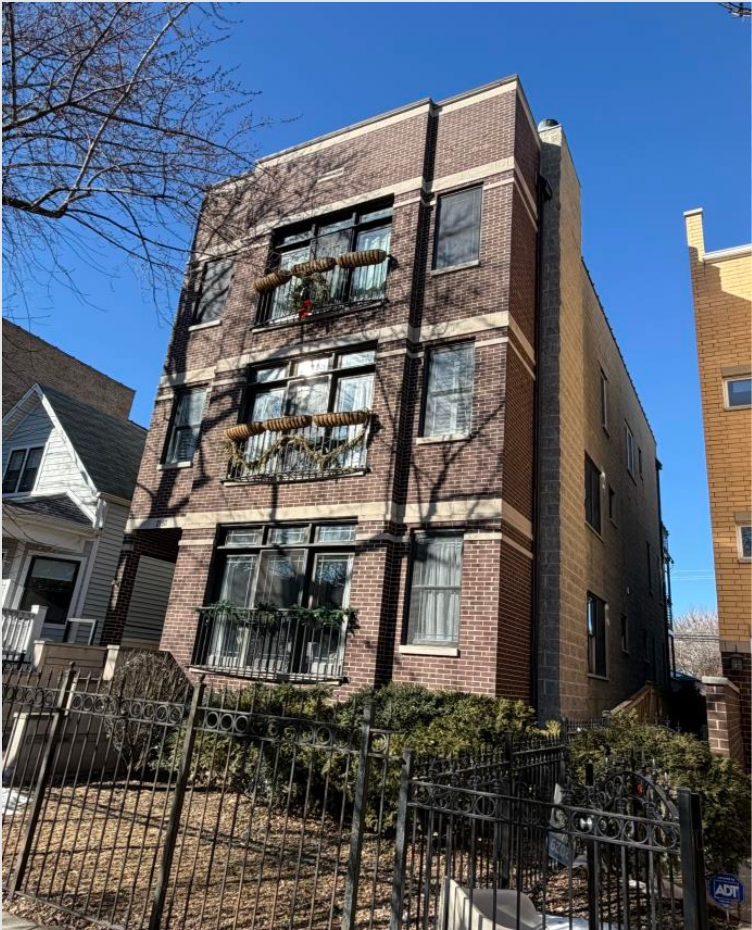
Brick, block, limestone and Renaissance Stone Building taking on moisture in several areas.
1. Cornice
2. Window Sills / Basement walkout
3. Roof Penetration Flashings
4. Sidewalk
5. Garage Capstones
6. Masonry Waterproofing Sealants
1. Cornice -
Cornice on the front of the house is a beautiful architectural feature. This is the fixture?? on a masonry rebuilding that would normally allow the roof to dry given the pitch of the roof was highest at the front of the house and lowest at the rear.
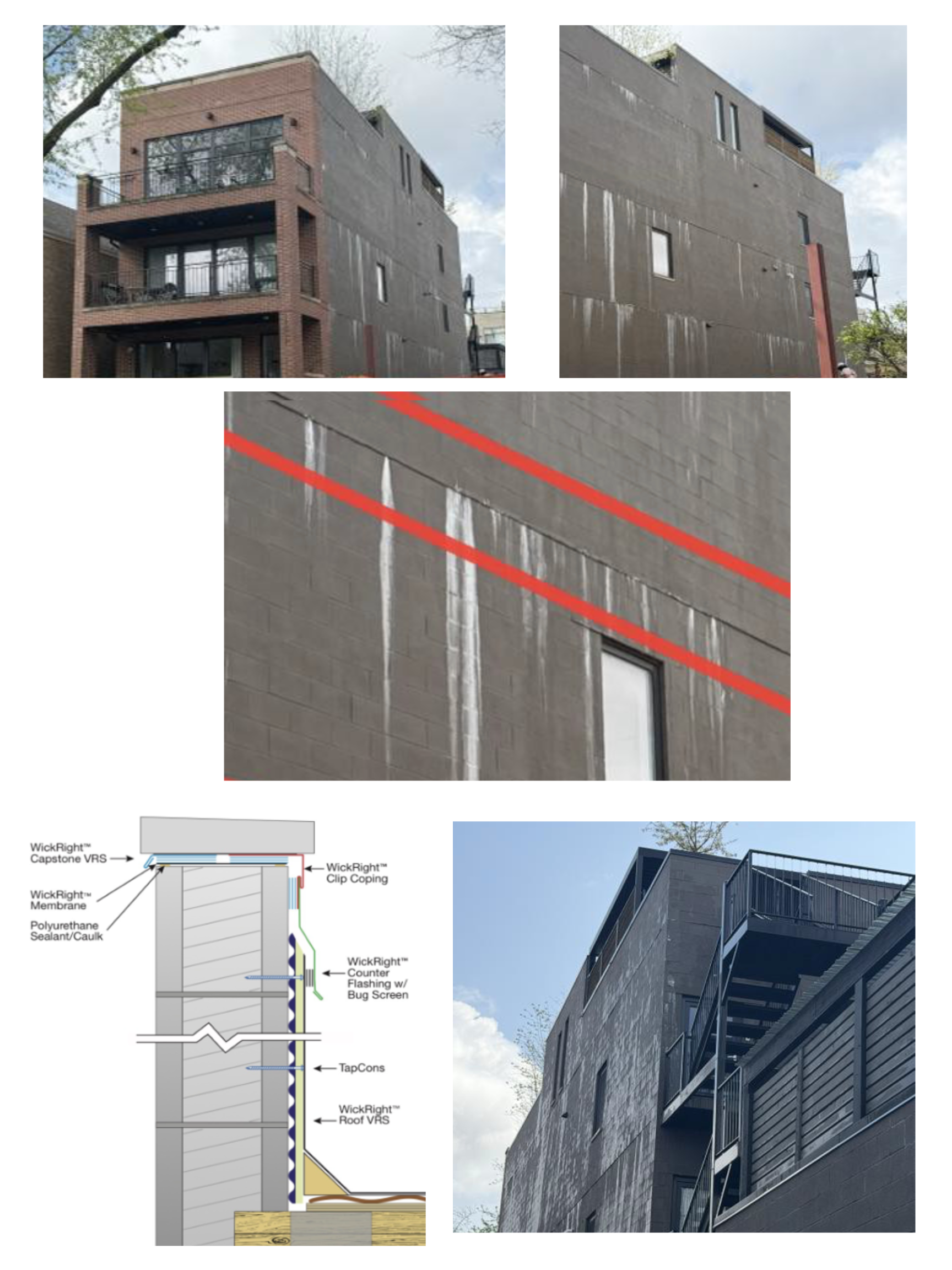
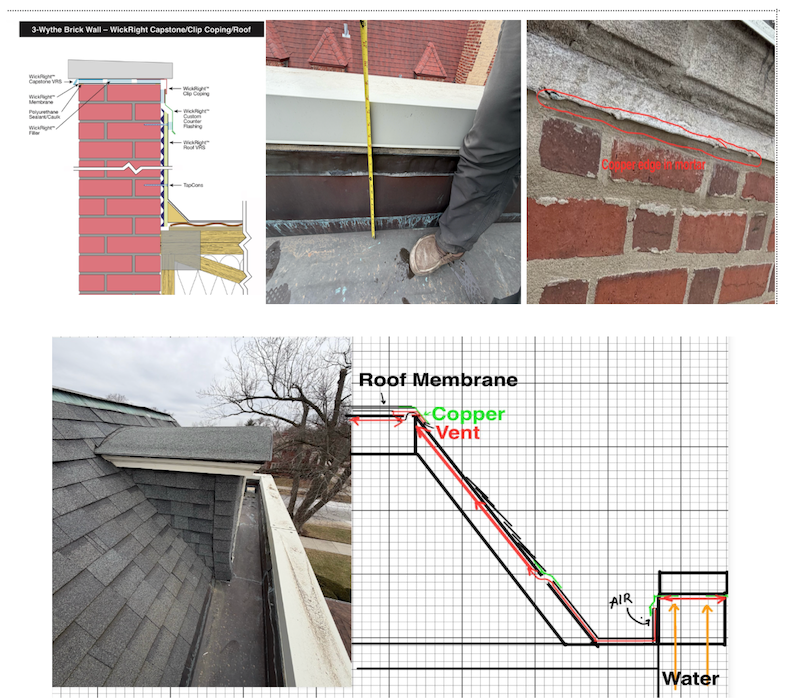
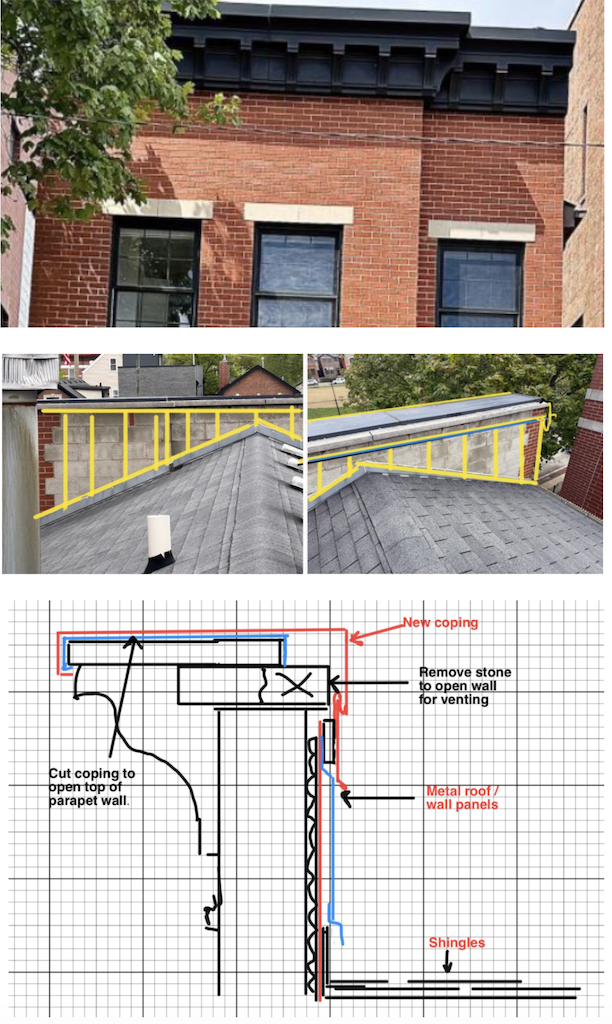
This cornice is different. Its made from cinderblock with no flashing under the limestone sills?? which cover the top. The metal coping does not fully cover the top of the parapet wall, allowing water to go down into the building. In order to fix the cornice and make it function properly, we must do the following:
A. remove existing cornice, top only.
B. Remove limestone coping and open the top of the wall to start the drying process.
C. Install WickRight metal coping vent across the top of the masonry wall
D. Install new metal coping. This will extend to cover the interior of the parapet wall.
E. Install metal panels over the interior of the parapet wall. Coping will cover the top of metal panels, stop water from entering CMU and allow drying. The bottom of the panel is folded to receive counter flashing to cover the roof - wall baby tins -
Yellow indicates a metal panel - See drawing above
2. Window sills - does not appear to have flashing under any of the limestone sills. If leaks show up in some areas and not others, it’s due to exposure to the weather. Water saturates through the stone and continues down often coming out of the top of the window below. Many times water is not detected when it saturating the brick, but when the water flows out of the window heads.
Front elevation limestone sills do not lineup with the windows, based on this circumstance, I recommend removing the limestone band on both floors, install flashing and re-installing the band.
There's similar condition in the walk out basement area. It would be a good idea to flash the limestone above the basement walkout. Water saturates through the limestone, transfers to the cinderblock behind it which then transfers moisture to the interior.
The picture above shows
A: the limestone sill flashing
B: pan flashing needed for the door as well as creating a drain in front of the door to keep water from saturating into the house. The patio should be 3 to 4 inches lower than the doors so it can be flashed.
C: concrete to stone connection - this connection should be ground out and sealed with polyurethane expansion joint sealant.
3. Roof penetration – Instead of using a neoprene boot, this should be finished in lead.
Recommendation: Remove shingles around the perimeter of the pipe penetration. Install lead flashing. Set into a bed of roofing cement and shingled appropriately. Please note: there is hail damage on the roof. In addition, the roof lacks venting. Air is not getting in from the eaves and minimal exchange is occurring with the existing roof vents.
4. Sidewalk – the grade is too high around the perimeter of the building.
This is the cause for water coming in over the foundation. The window location is also another source of water. It is positioned low to grade and wicks moisture to the interior.
Repair Recommendation: Place Butel tape to the inside corner of the of the masonry/sidewalk. Screw down a stainless steel angle on top of the tape to compress and seal the gap. Butel does not leach out. Cover the angle with a small 24 gauge painted steel.
5. Garage capstones – water is getting into the wall and causing damage to the ends of the roof trusses. You can see discoloration of the wood framing, indicating breakdown of the lumber. To keep this from happening, the wall needs to be vented and sealed on the exterior. Without removing the pergola, we should remove the capstones from the exterior of the building. Install vented flashing and re-install capstones. We don't use mortar when setting the capstones.
6. Masonry sealants: Apply ChemTrete PB 100 flood coat to the front, side and rear elevations of home and garage. Includes caulking of all windows and doors.