
3/9/26 – Evaluation – 1928 Historic Masonry Home, Beverly neighborhood, Chicago
Evaluation of single family Historic Masonry home built in 1928 in Beverly neighborhood, Chicago - from Wet Building Solutions Proposals March 2026
Goal of Work – Restore the Building’s Ability to Dry
Many masonry buildings develop moisture problems when modern repairs unintentionally trap water within the wall assembly. When moisture cannot escape, it accumulates within the masonry and structural framing, leading to deterioration of mortar, wood framing, and interior finishes. The proposed work focuses on interrupting the moisture cycle, restoring controlled drying, and preventing future condensation within the wall and roof assemblies.
The purpose of this work is not simply to repair visible damage, but to correct the moisture cycle affecting the building. Many buildings receive partial repairs that temporarily hide the symptoms while moisture continues to accumulate within the wall and roof assemblies. The scope proposed here focuses on restoring the building’s ability to dry and preventing the conditions that cause ongoing deterioration. Addressing the moisture movement now helps protect the structure, avoids repeat repair costs, and preserves the long‑term integrity of the building.
Capstone flashing:
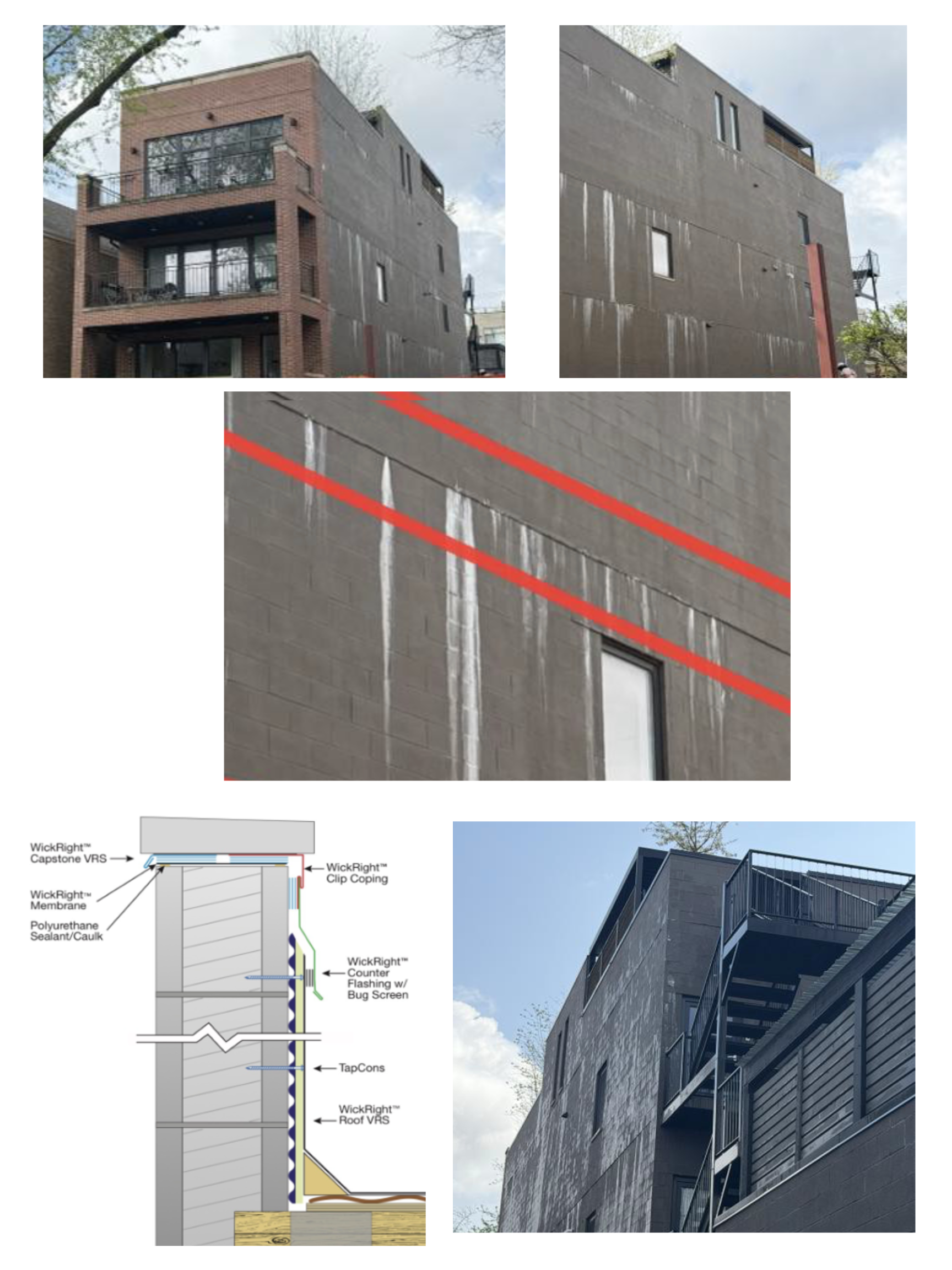
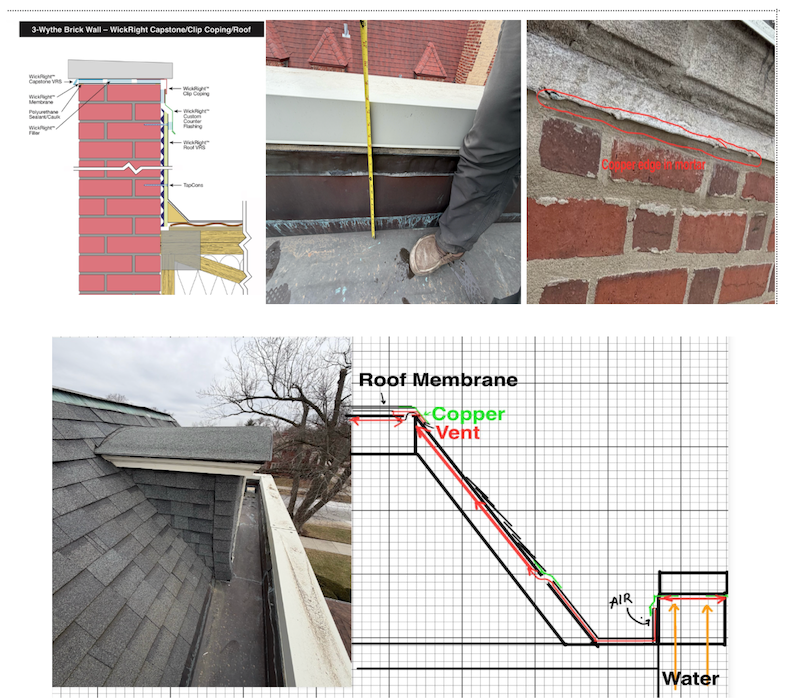
The reason for installing vented flashing is to create a drying event in the masonry wall. It’s called hygric distribution and drying. Lime mortar allows water to travel from wet to dry very quickly; almost like moisture in bread. When it dries out, it gets absorbed. When repairs were done to your home, the mason used standard hard mortar. It doesn’t absorb water. It’s hard from Portland cement crystalizing the lime. This traps water. Since Portland cement mortar is only on the outside of the building (where tuckpointing happens) and the old lime is on the inside (from the original construction), then water moves toward the interior inside – wet to dry.
In addition, the copper between the masonry and limestone caps on the parapets is the source of condensation. Copper gets warm quickly while the masonry is cold and wet. Condensation forms then dripping occurs. We can use copper to make your new vented flashings. The difference is vented flashings have a corrugated plastic gap between the metal and the masonry forming a thermal break. Vented flashings do not cause condensation.
Installation Process:
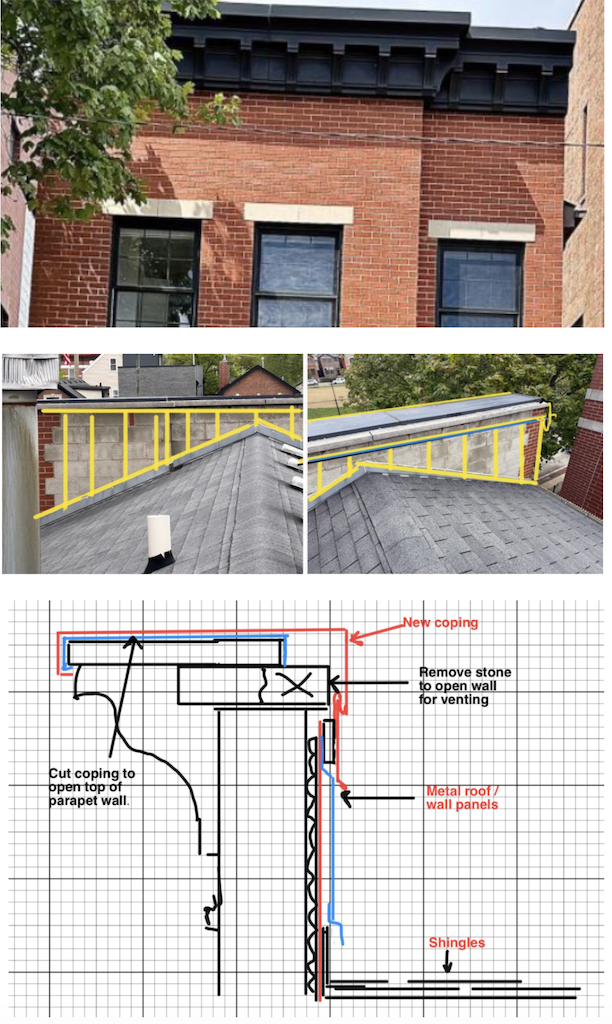
Remove capstones, remove copper metal layer. Remove mortar from top of wall and bottom of stones. Install WickRight Vented Drip Edge. Re-install existing capstones. Seal head joints of the stones with backer rod and polyurethane sealant.
Please note: I have considered your project without this process and keeping the copper coping. However, the metal layer between the masonry and stone is creating a repeating cycle of condensation that must be eliminated. Based on the age of your home, the interior core of the parapet wall could be fragile and require repair. If we provide an exit for the water vapor, the deterioration of the interior brick wythes, may stall and allow you to postpone parapet rebuilding.
Install roof venting: parapet wall, bottom of trough, shingle patching:
Remove 2’ of shingles from bottom of gutter area. Remove copper. Install vent panel to interior of parapet wall, bottom of gutter and 2’ section of mansard roof. Install roof membrane. Cut slot in roof sheathing. Install counter flashing. Install shingles at flashing.
Gutter – rear elevation:
Remove copper, install venting behind gutter, re-install existing copper apron / gutter
Dormers - The dormers will be affected:
We suggest, copying existing details, and installing new shingles. It’s a small area and to save the shingles will cost more than to strip then install new. During the siding installation process, we need to create a gap between the siding (shingles) and house wrap to allow for drying. Now would be the time to install a nicer material if that’s a priority for you.
Metals:
Window flashing and siding: Pan flashing must be integrated into the roof.
Masonry sealants:
Typical new tuckpointing mortar is harder (contains Portland cement), than the original mortar used to build your house. Contemporary mortar invites more water to enter the building and become trapped which fuels the cycle of condensation and more moisture affecting the interior perimeter of the building. The entire building needs to block bulk water from entering the envelope so we can offset the balance of wetting to more drying, therefore I recommend sealing the whole building.